
Cyclospora, The Deregulatory State, and Implications for USMCA
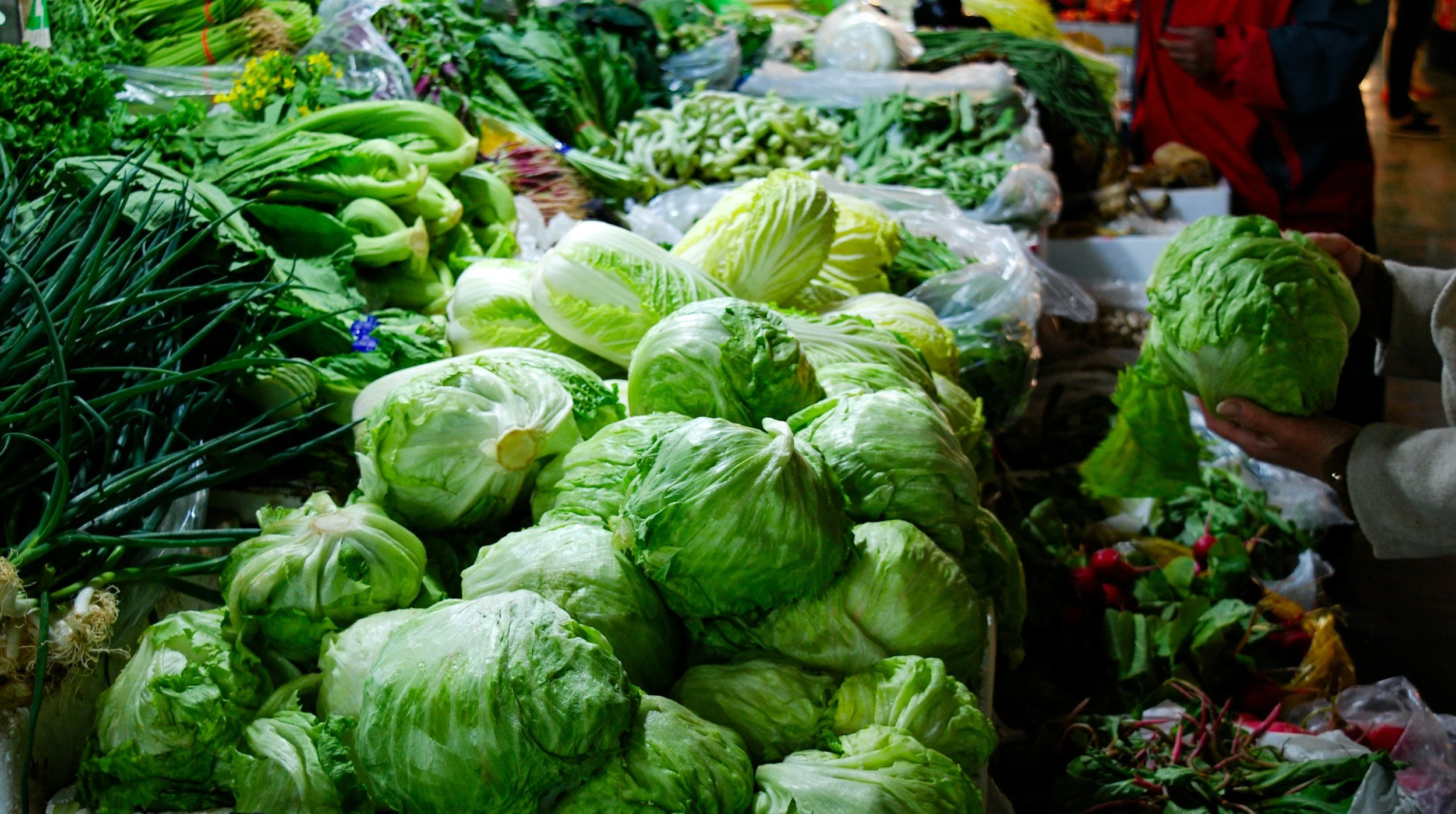
When DOGE started cutting food safety inspection, I stopped buying lettuce. That was in February of 2025. As time went on, I started to wonder if I’d overreacted - and then the cyclospora outbreak happened.
The DOGE attack on food safety is the logical outcome of decades of bipartisan hostility to regulations themselves. That hostility is why trade agreements have mushroomed in size, touching almost every aspect of our lives. Including food safety.
It’s something I saw with clarity during the negotiation of the Trans-Pacific Partnership when I was working on Capitol Hill in the 2010s. The food safety rules were modified to make it harder for food safety inspectors to do their jobs. Unbeknownst to Americans who rely on their government to keep them safe from companies looking to make a quick buck by importing dangerous (and cheap) products, trade agreements put constraints on the government’s ability to inspect food imports.
To be fair, in TPP, it wasn’t the United States (for once) that was pushing for weaker border enforcement of food safety rules. It was our trading partners, who wanted to boost their exports to the most lucrative market in the world. Members of Congress like Rosa DeLauro - chair of the Food Safety Caucus and possibly the next Chair of House Appropriations - knew it. And in their extreme desire to get the deal done - deal fever - the Obama Administration went along with it.
People kept telling us that USMCA was mostly like TPP. On food safety, they’re right.
A week after Inauguration Day, I warned about the Administration taking us back to The Jungle. Americans are starting to get a feel for what life was like before the U.S. government began regulating to protect people from profiteers.
Here’s the problem for the Administration. They want to blame Mexico, and Taco Bell, and anybody other than the company responsible for distributing the produce - a company that apparently gave the Administration a lot of money right around the time domestic food safety rules were weakened. Maybe the source is Mexico: if that’s true, then it’s bad that we’ve weakened our border safety regime. If that’s not true, we’re scapegoating Mexico for our domestic problems. But either way, the destruction of confidence in the American government’s ability - or desire - to protect people at the border and within it will be hard to repair.
Ironically, the upshot of all of this may end up being that countries – and exporters– that protect consumers instead of throwing them to the “mean rapacity” of the profiteering class will end up the big winners, carried by a reputation of prioritizing safety over profit. That will mean that the American deregulatory state will be a drag on our already-beleaguered farmers, who are export-dependent in a way that our manufacturers are not.
Food Safety and Trade Agreements
To be fair, we have these food safety provisions in our trade agreements in the first place because sometimes countries do use regulations to block imports just to keep those imports out, not because there’s anything wrong with the food. The desire to address this kind of behavior is valid. The problem is that whether a country is regulating to protect the public or to pretend it’s protecting the public isn’t always clear-cut.
The core question when it comes to trade rules is: do you err on the side of food safety, or trade facilitation? Neoliberal trade deals err on the side of trade facilitation.

Both the original NAFTA and the WTO are creatures of the 1990s, when “government is the problem” became a mantra not only on the Reagan side of the aisle, but the Clinton side of the aisle too. Our trade agreements reflect it, and indeed we have generations of trade aficionados who buy into the idea that getting government out of trade is the purpose of the exercise.
Both NAFTA and the WTO, unlike the GATT, have a list of constraints on what governments are allowed to do when it comes to border measures involving food safety.
These rules are referred to by the intimidating phrase “Sanitary and Phytosanitary” measures, or SPS for short. This kind of thing is exactly why normal people get cowed into believing trade policy is only for the Illuminati. If negotiators had actually called it the “Food Safety Agreement,” the Battle in Seattle would have had twice as many protestors, because people would have known exactly what was on the table: it sure wasn’t going to be making food more safe. Hence, the rejection of vernacular for something more along the lines of Latin.
How did they talk about this stuff in 1947, when the lessons from The Jungle and the ’29 crash were still fresh? These measures were described as those “necessary to protect human, animal or plant life or health” – plain English! – and were included to make it clear that governments in fact had the right to protect those things. In fact, the New Dealers wanted a much broader exemption than what we ended up with in GATT, as I flagged here in 2020.
When the Trans-Pacific Partnership rolled around, the deregulatory bandwagon was going full throttle. On food safety, USTR initially held the line, but our TPP trading partners pushed and pushed. Recognizing we would have limited influence on an administration bound and determined to get TPP done, Ways and Means Dems tried to be creative in solving the problem. Those were the early days of the Tea Party movement, of budget brinksmanship, of debt ceiling hostage-taking, of government shutdowns. So one of our solutions was to propose fees at the border to make sure our inspectors could have the resources necessary to run the safety traps on food imports.
That was our way of laying down a marker that funding the government is, in fact, the solution to many of our problems. For those who’ve consumed more Imodium in the last month than in the whole of their lives, that probably sounds about right.
Food Safety’s on the Other Foot
Now we have MAHA, a “make measles great again” movement that also believes government is the problem and the answer is to hamstring its ability to function.
And so I stopped buying lettuce in February 2025 because, having worked on trade for 30 years, I understand exactly why we have food safety inspectors.
None of this is going to be good for American farmers, either in terms of their market here, or their markets abroad.
USMCA Review
Now that July 1 has passed and we are entering the Decade of USMCA, the question is what kind of review it will be. Some want to find a way to just move on without changing much if anything. They think USMCA is a template, forevermore.
But the destruction of American regulatory infrastructure before our very eyes, and the gastroenterological manifestation of it, should force us to examine what exactly we’ve been trying to achieve with these free trade agreements over the past 40 years.
In 2020, I published a paper outlining what a model “free trade” agreement would look like. It doesn’t have an SPS chapter. It does have a transparency chapter, so that people can know what’s happening with the regulatory state. But it methodically removes all the junk in these agreements that operates to prevent the government from protecting you from the anarcho-libertarian cohort that has been taking over since Ronald Reagan declared it was Morning in America. If this is Morning in America, a lot of people are going to go back to bed.
Alternatively, we can treat the USMCA review as a real opportunity to think about what we want from each other and for each other, as North American neighbors, and as partners, and as individual societies.