
The Worker-Centered Pope
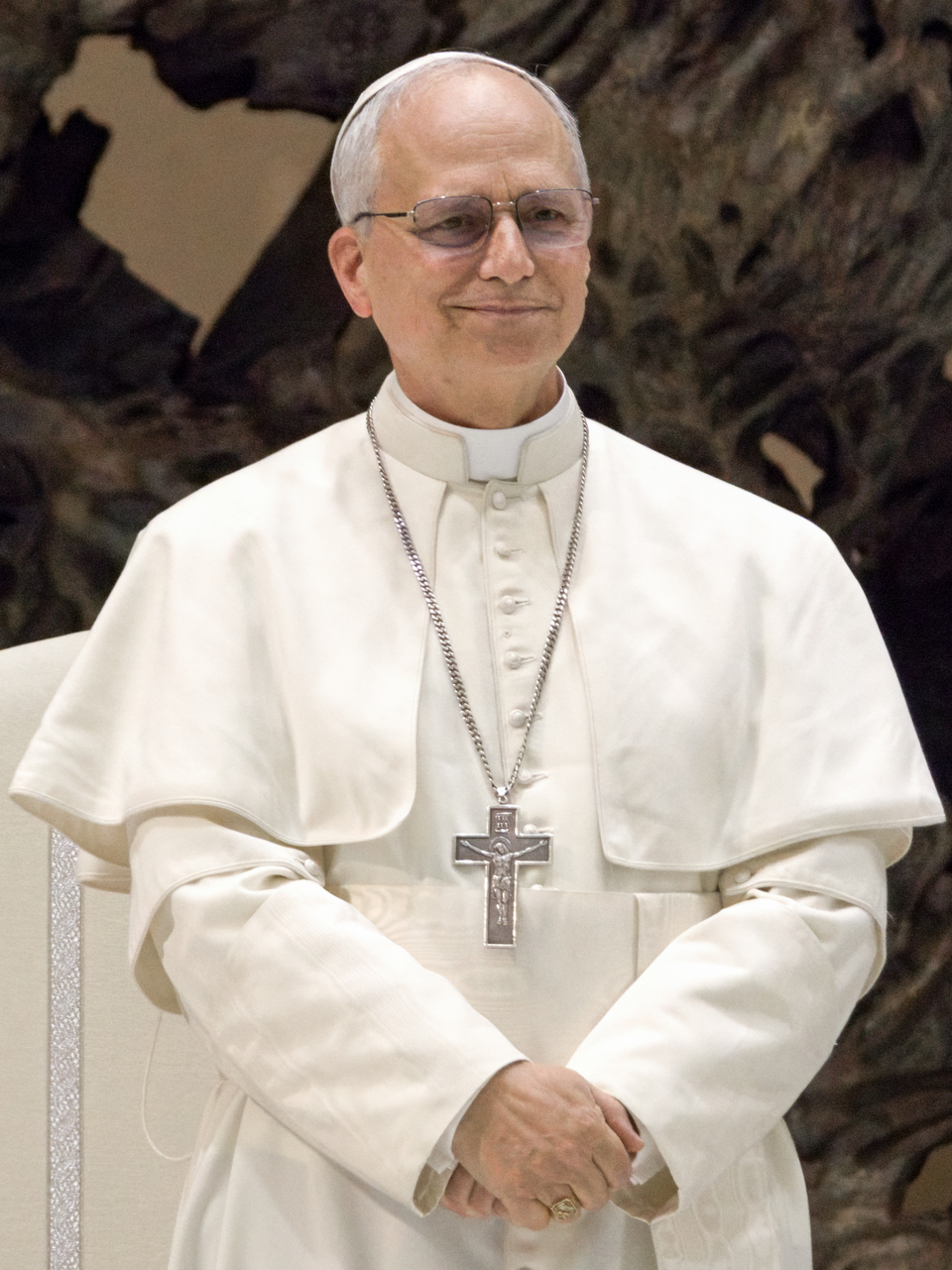
Photo Credit: Edgar Beltrán, The Pillar
On May 15, Pope Leo signed the encyclical Magnifica Humanitas. It’s 42,000 words, but if one sentence captures its essence, it’s this:
The human person is an end, not a means, and the economic order must remain subordinate to human dignity and the common good.
Solidarity as the Basis for Economic Governance
The Pope signed Magnifica Humanitas exactly 135 years after his namesake, Leo XIII, signed Rerum Novarum. Rerum Novarum – “new things” – reflected Leo XIII’s views on the industrial revolution in the midst of the Gilded Age.
The legacy of Rerum Novarum, according to the current Holy Father, is that it inspired “initiatives … including associations, trade unions, cooperative and welfare organizations, [that] have contributed decisively to improving labor legislation, protecting the most vulnerable and promoting more humane conditions…”
Leo XIV’s encyclical draws on Rerum Novarum and applies it to the “Fourth Industrial Revolution.” Like his predecessors, he grounds his views in solidarity. The Church recognizes “the positive potential of the market and private initiative only if they remain subordinate to the moral law and are guided by the principle of solidarity, without sacrificing the most vulnerable to the rationale of profit.”
Solidarity is “the concrete recognition that the future of each individual is connected to the future of all.” It “arises precisely when we decide not to remain indifferent to what happens to our neighbor” and instead we cooperate, “thinking and acting in terms of community.”
Like Popes before him, he rejects trickle-down economics and the obsession with “efficiency,” arguing that
a just society requires a vigilant State and civil institutions that are capable of overcoming the singular mentality of efficiency…. Instead of waiting for the benefits of growth to reach the poor ‘eventually,’ decisions need to be taken to ensure that growth becomes inclusive from the outset. The experience of recent decades shows that in economic and financial crises, it is always the poor who pay the highest price, while the theories that promise automatic general prosperity often prove to be illusory.
When it comes to redistribution vs. predistribution, the Pope is on Team Predistribution.
Not only does the Pope reject trickle-down economics, but he also rejects short-termism, arguing that “it may seem advantageous to reduce labor costs or maximize financial efficiency [in the short term], but in the long term this undermines the very foundations of social coexistence.”
Surveying Catholic social teaching over the past century, the Pope also invokes John Paul II, who wrote in his encyclical Laborem Exercens that “fair wages [are] the concrete means of verifying the justness of the entire socioeconomic system because they reveal whether the worker is treated as a person or merely as a cost of production.” This is similar to Adam Smith’s own view that the measure of an economy is how the poorest workers are faring.
Unsurprisingly, then, Pope Leo is Keynesian: “the State has the duty to support business activity by fostering conditions favorable to employment, promoting work where it is lacking and defending it in times of crisis….”
Solidarity encompasses inclusion, and so he calls out the efforts to sow division. He writes that
[d]iversity is increasingly perceived as a threat, which fuels a desire for possession, a will to dominate, hegemonic ambitions, abuses of power and a fear of those are different, thereby creating an environment in which new conflicts can develop almost imperceptibly.
Some arch-conservative Catholics contend that Pope Leo is “woke.” There are certainly parts of the encyclical that most would not consider “woke” (for example, the definition of family as being based on the union of one man and one woman). But the encyclical meticulously traces more than a hundred years of Catholic social teaching, across Popes ranging from conservative to progressive. If this Pope is woke, so was Benedict XVI.
Power and Democracy
Magnifica Humanitas is plain-spoken about the problem of concentrated power and of monopoly, and how they threaten democracy itself. The Pope writes that the Church
values democracy insofar as it guarantees the effective participation of citizens, enables them to elect and peacefully replace their leaders and prevents power from being monopolized by small elite groups motivated by particular or ideological interests.

He also defends journalism, repeating Pope Francis’ thanks for forcing the Church to deal with the abuse of children. He criticizes the attention economy and urges strengthening of “serious journalism and forums for debate, where reasoned argumentation and verification carry greater weight than immediate reaction.” He explains that “the search for truth is an essential element of democracy…. Indifference to the truth leads, slowly but surely, to totalitarianism.” He also warns of a
culture of power [that] is taking hold, in which the availability of resources and the ability to dominate tend to dictate the agenda and criteria for decision-making…. This culture of power… grows by normalizing war, pursuing ever-greater military power, taking advantage of the crisis of multilateralism and fueling a false realism that insists that there is no alternative.
He warns that the “growing power of digital systems could lead us toward new atrocities that are no less shameful than those of the past that we now deplore.” He says that “every technical or economic decision should … be an opportunity for assessing whether the advances in AI are promoting justice and participation or concentrating wealth and power in the hands of a select few.”
Artificial Intelligence
The encyclical is widely understood to be a document on AI, but as the foregoing shows, it’s about much more than that. It’s about Catholic social teaching in the age of AI:
In the digital age, a just social order guarantees everyone equal access to opportunities, protects the youngest and weakest members of society, combats hate and misinformation and subjects the use of data and technology to public oversight, so that the guiding principle is not solely profit but the dignity of every person and common good of all people.
When innovation is motivated solely for purposes of profit, declining wages and widening inequality follow. He states that artificial intelligence can be useful, but under the prevailing economic regime, it is being deployed in a way that undermines the social fabric. The Pope, like many, believes that policymakers must step in to regulate it so that it serves humanity, not the other way around.
Again, he sees the problem of power: “AI tends to amplify the power of those who already possess economic resources, expertise and access to data… Small but highly influential groups can … influence democratic processes and steer economic dynamics to their own advantage, undermining social justice and solidarity….”

And he – unlike many trade negotiators – understands the concerns around data. He does not mince words: “colonialism assumes new forms…. It… appropriates data, transforming personal lives into exploitable information. Entire regions are … subjected to a new mindset of extraction.” Referring specifically to health data, he says that the quest to harvest it has become the “new ‘rare earths’ of power: vital data which … can be used to … determine who and what is deemed to matter.”
Ownership of data “cannot be left solely in private hands but must be appropriately regulated.” Under those circumstances, “shared knowledge becomes a true common good rather than an instrument of dominance” and thus we restore to “individuals… the ability to decide how [their]data is used, by whom and for whose benefits.”
He goes still further: failure to regulate appropriately will mean that “the digital age will not be post-colonial, but colonial in another form.”
He highlights the exploitation of workers in this sector, whether through content moderation, mining, or surveillance, asserting that there is a fight against “new forms of slavery.” Echoing Acemoglu & Johnson, he criticizes a model that purports to boost productivity but “forces workers to adapt to the speed and demands of machines, rather than machines being designed to support those who work.” Echoing Adam Smith, he laments the stultifying nature of the work, noting that the “need to keep up with the pace of technology can erode workers’ sense of agency and stifle the innovative abilities they are expected to bring to their work.”
“income from capital risks replacing income from labor”
For good measure, the Pope also weighs in on crypto and financialization. He is concerned that “income from capital risks replacing income from labor” and contends that “finance for its own sake is fundamentally different from finance aimed at the development, creation and evolution of work.”
When the Pope speaks about colonialism and slavery, he speaks with a particular authority: his family was part of the Great Migration, escaping the tyranny of Jim Crow. Jim Crow was - is - the effort to reinstate the economic model of exploitation that the Civil War sought to end. In that context, it is not surprising that the Pope is choosing to spend the 250th anniversary of the United States with migrants.
Globalization and “Opposing Imperialisms”
The Pope extends his views to global governance. He affirms the goals of “promoting dignified work, social inclusion, and an equitable distribution of the benefits of innovation” and goes on to recognize that since
many economic decisions transcend national borders, there is also a need for international cooperation capable of defining common strategies, especially in favor of the most vulnerable countries and people, in order to promote development and to overcome welfare dependency.
Because he rejects trickle-down economics, he has no trouble rejecting its application to globalization. His assessment of the system is spot on:
After 1989, the collapse of communist regimes in Europe was followed by a predominantly economic globalization… An almost blind faith was placed in the ability of the markets to generate prosperity, democracy and stability. In reality …. [This version of g]lobalization has provoked fundamentalist, identity-based and nationalistic reactions. The result is a far cry from genuine multilateralism.

He references Benedict XVI’s critique, on the heels of the financial crisis, that a “new global economic and financial system, marked by a vast mobility of capital and means of production, had reduced the political power of States and their ability to influence economic processes.” It is these mobile capital flows that Keynes et al sought to discipline at Bretton Woods in 1944, and which neoliberals subsequently unwound.
Similarly, he – unlike so many who have memory-holed the lessons from the pandemic – sees that supply chains are still opaque and thus “must be more transparent, so that no competitive advantage is built upon hidden exploitation.” And he warns of the “competitiveness trap,” pointing out that it is
rarely concerned with social sustainability. New collaborative efforts are needed among political leaders, labor organizations, the business world, and the scientific community in order to develop rapidly adequate shared regulations and protections, including at the international level.
Yes indeed! Otherwise, you get the nightmare in Europe where efforts to promote sustainable supply chains were felled by the very rent-seekers the Pope warns about.
His critique of the neoliberal model of globalization goes still deeper. He says that “if we examine global dynamics, we can recognize more clearly the spread of a culture of power characterized by polarization and violence.” He goes on to criticize not just the “globalized technocratic paradigm,” but “the remote clash between opposing imperialisms.”
Peace

For the Pope, “prosperity contributes to building and reinforcing peace only if it is “widespread, inclusive and sustainable.” As with so much of Catholic social teaching, it dovetails with the approach of those who built a new world order from the ashes of World War II. The goal for FDR was to move past the colonial model, toward self-determination, to allow everyone to benefit from a growing global economy: shared prosperity as the pathway to peace.
Nehemiah vs. Babel

The Pope famously structured his encyclical around the metaphors of the Tower of Babel and the rebuilding of the walls of Jerusalem. The former was built by those who “sought to guarantee stability and power for themselves … a single language, a single technology, a single direction.” The latter involved Nehemiah, who “did not impose solutions from above [but] …. listened to the concerns [of the people], coordinated their efforts and addressed any opposition.”
Pope Leo finishes with this:
I see in him a striking parable of our own vocation, which is … to be … men and women prepared to enter the construction sites of history … in order to rebuild what has collapsed and protect what is threatened.
Amen.