

And the last one was a doozy!
But why is every election a change election?
Because people keep demanding change, and they’re not getting change they want. When Trump was elected in 2016, it was in part because he attacked Democrats for having become bougie, detached from the concerns of what was supposed to be their working-class base. In the lingering wake of the financial crisis, where Democrats in charge bailed out banks but not homeowners, he made himself – a Republican - the populist change candidate. On economic issues, he criticized free trade and Big Tech monopolies. He also took the stopper off the bottle of bigotry that a lot of Americans didn’t realize was quite so full.
November 3 – and especially the voter turnout in what people are now calling the New South – is a downpayment on uprooting both the bigotry and economic injustice embedded in the American system. But neoliberal cognitive capture lingers. Even the new-and-improved lefty version of Bill Kristol can’t help himself: he’s claiming the surge in turnout from people of color proved that civil rights are more important than kitchen table issues. C’mon Bill, find the inner social democrat you’ve told us exists!
The real answer is this: civil rights and kitchen tables issues are not separate things. The March on Washington was the March on Washington for Jobs and Freedom. The New South will quickly become the Old South if we take our cues from Kristol on this one.
The good news is, the most dominant Democrat in the history of the party gave us a cheat sheet for how to dig ourselves out of exactly this kind of hole. And he did it when Southern Democrats were of the Jim Crow variety. Coming into office with Smoot-Hawley tariffs on the books, FDR didn’t move to repeal them: he used them to negotiate with other governments on his way to building a new global economic order.
With majorities in the South delivered by a multiracial coalition, why would our ambitions be any less?
Campaigning on Change and Executing Change are Different Things
Americans keep voting for change. As we have learned, not all change is good. Look no further than our very own masked, lawless police force, or the naked corruption on display every day. There’s a reason the election produced a very particular kind of change: the largest incumbent defeat since Watergate.
To tariff or not to tariff? That is not the question.
But in the face of these results, establishment types seem to have decided the best thing to do is to go back to pre-Trump policy. Kind of like Keir Starmer pining for Blairism. How did that work out? He, too, swept into office with a giant majority and was forced out two years later, replaced by former Manchester mayor Andy Burnham. Burnham, by rejecting centrism for centrism’s sake and instead believing in something, has reversed Labour’s decline and surged in popularity. (He’s also a fan of Katherine Tai’s trade policy.)
The risk for establishment Democrats is that 2015 is not going to satisfy the voters’ itch for change. 2015, after all, gave us 2016 – that is, Donald Trump.
The question before the incoming Congress is not “to tariff or not to tariff?” Notwithstanding the fecklessness of Trump’s trade policy, what people really want is an end to corporate control over government and corporate control over the economy. That’s part of what underlies the data center fight.
We should face up to the fact that multinational corporations thrive regardless of whether we’re doing free trade or not free trade. Those winning today are the ones who were winning in 2015 – Big Tech, Big Pharma, Big [fill in the blank]. Take a look at the roll call from the very fraught vote on the free-trade Trade Promotion Authority bill in 2015, here and here: you’ll see familiar MAGA faces there. Heads, MNCs win; tails you lose.
Once again: this election was the biggest swing since Watergate. Americans don’t like corruption. And for a lot of Americans, policy by and for corporations is just a more polite version of the vulgarity on display today.
Democrats won’t get a pass.
Tariffs Tariffs Tariffs
Let’s start with some facts. Even if you propose a slate of tariff repeal bills, Tariff Man is going to veto them. So we’re already in the land of messaging, not the land of delivering. That’s ok – it’s what happens with divided government, especially when one side is figuring out how to totally disempower the other.
The acute driver of anger over prices is – very obviously – the price of gas and diesel thanks to the Iran War. Isabella Weber has called out the profiteering. But take on the oil and gas companies? Nah. Remember, Third Way told us the war is not with Iran but with the Democratic Socialists of America. Tariffs are a much more comfortable target for elites who tell themselves Econ 101 is the real world.
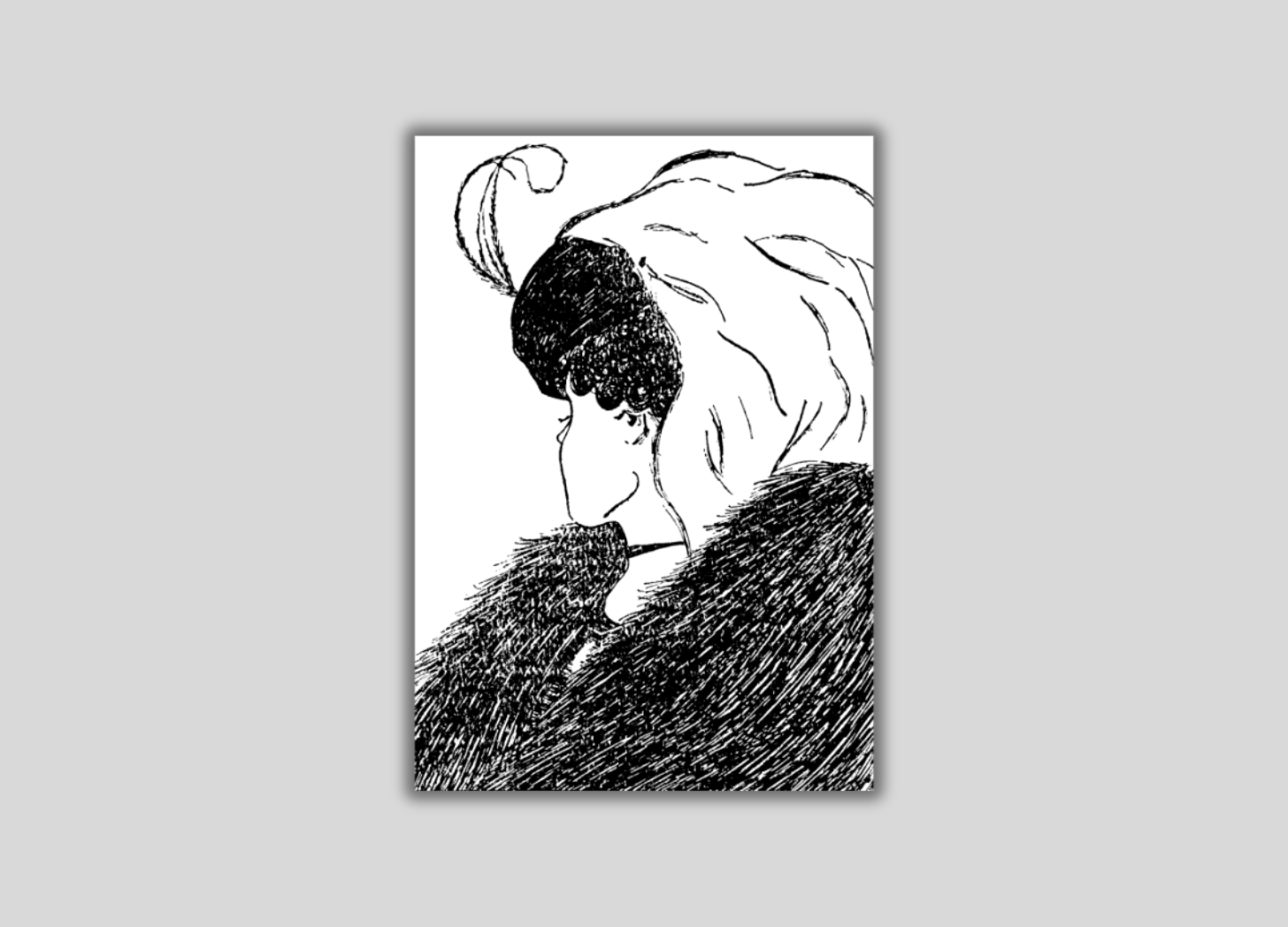
The tough thing for politicians to process is that Americans have a love/hate relationship with tariffs. They love them sometimes, and they hate them sometimes. It’s why polling on tariffs is like that famous picture where some see the old lady, and some see the young lady – they’re both there.
Politicians who look only at polling miss the larger picture. Voters actually have a more nuanced intuition of trade policy than the political mob in D.C. gives them credit for. They hate the Administration’s tariffs because the only rhyme or reason to them is shaking down countries we consider allies. But they also hate the version of globalization that offshored jobs gutted communities with promises of prosperity that never materialized.
Politicians’ job is to figure out how to navigate that complexity, not to pretend it doesn’t exist. Zohran Mamdani doesn’t treat his constituents like they’re idiots who need to be fed pablum. His approval rating remains north of 60%. (Bonus: he makes fun of Third Way on Fox).
If anyone wants to see how it’s done, look no further than Senator-Elect Abdul El Sayed’s final debate against Mike Rogers. El Sayed Rogers for supporting Trump’s tariffs, which he called “haphazard” - but also for supporting NAFTA. (Remember what I said about who was a free trade and who’s MAGA now…) But El Sayed also pointed out that tariffs can be used intelligently, to incentivize the things we want.
WWFDRD?
“Me? If I’m running things on Capitol Hill and I need a messaging bill – because that’s what we’re talking about, messaging - this is what I’d do. I’d call it the “No Tariffs for Billionaires Act.” The bill would reverse the Big Beautiful tax cuts and send Americans a check for the IEEPA tariff money they’re not getting back.”
Luckily for us, FDR faced the exact problem of what to do with jacked up tariffs during challenging economic times. Smoot-Hawley passed in 1930, and he took office in 1933. In his first 100 days, in the middle of a major economic crisis and control of both Houses of Congress, did he say “I’m getting rid of all the Smoot-Hawley tariffs”? No! He ended up using those tariffs to negotiate trade deals as he built his way toward an entirely new global economic order, grounded in delivering for working people.
Me? If I’m running things on Capitol Hill and I need a messaging bill – because that’s what we’re talking about, messaging - this is what I’d do. I’d call it the “No Tariffs for Billionaires Act.” The bill would reverse the Big Beautiful tax cuts and send Americans a check for the IEEPA tariff money they’re not getting back.
That would make it very clear who’s on the side of corporations, and who’s on the side of the working stiff. Which is, you know, the message.
A Big Blue/Green Tariff Hug for Allies and Partners
Then I’d pull an FDR and see what kind of new world order I could start to fashion with those tariffs. We need to reverse the global race to the bottom that is driving a decline in the labor share of income around the world, ruining the planet, and destabilizing democracies. We need to use industrial policy and trade to promote clean technology to drive down energy prices. We need to work with allies and partners on sectoral agreements to start to deliver on the promise of a new and better version of globalization.

Will they have us? We’ve burned a lot of bridges, but in the end, our purchasing power can’t be beat. Perhaps more importantly, as angry as they are at us, what they really want is for us to be the Americans we ourselves want to be. On July 4, the French lit up the Eiffel Tower to celebrate our 250th, and the Ukrainians lit up their national monument, too. It’s hard to say we deserved it at this moment in time, but they did it because, in the end, they believe in the promise of America, if not the current reality.
American voters do, too! The counterintuitive part is that the tariffs can actually help us get there. The problem with the global economy is that the tariffs of the neoliberal era were generally so low that it’s impossible to reprogram supply chains to deliver what we need. And every politician should be worried that the next COVID is right around the corner, and they’ll be on the hook for the next inflationary hit. Don’t you want to be able to tell voters you’re fixing it?
We have the chance to create an actual clean industrial strategy and to work with partners and allies to reshape those supply chains, to deliver for people and the planet at the same time.
We lose that opportunity if we just pull the tariffs off.
Bougie Democrats and Last Man Syndrome
The most important part of Francis Fukuyama’s End of History and the Last Man isn’t the End of History part, but the Last Man part. The Last Man is the complacent, soulless person who emerges at the end of history, who doesn’t understand ideological struggle, who has nothing to offer.
If Democrats want to put a stake in fascism for real, they can’t be Last Men, bougie Democrats pining for the halcyon days of 2015, that weren’t in fact halcyon at all for a lot of Americans. Democrats thought then that the stakes were small, and if they remain stuck in that kind of technocratic small-mindedness, we’re sunk. Dream bigger, think bigger, be bigger.
Just because one set of fascists proves to be incompetent doesn’t mean every set of fascists will be incompetent. Those are the stakes. Americans went to the polls screaming about corruption and injustice. Is the response going to be technocracy, because that’s all Last Men know how to do? Then it really will be 2015 all over again - and 2016.
On the 250th anniversary of our revolution, the American people went to the polls and threw down the gauntlet. Let’s aspire to be the America that the French and the Ukrainians celebrated on July 4. Let’s remember the boldness of the revolutionary vision.
If one thing defines us, it’s that we believe anything is possible. We ought to live up to it, no?